


Safety Coverall Standards and Classifications: Everything You Need to Know
In 2023, 84 workers (42%) died from vehicle incidents at work in Australia — the largest proportion of all fatal injuries, according to Safe Work Australia's Key Work Health and Safety Statistics 2024.
That's not just a number — it's 84 workplaces where better visibility, proper PPE or the right coveralls could have prevented a fatality.
Personal protective equipment (PPE) is a proven defence against workplace injuries; coveralls are a full-body layer that reduces skin exposure to flames, sparks, chemicals, particulates and mechanical hazards. This guide explains what coveralls are and why standards matter in Australian workplaces. Read further about the key AS/NZS standards and protection type classifications, practical selection guidance, and recommended WorkArmour products matched to common industry risks.
What Are Coveralls and Why Are They Important?
Coveralls are one of the most critical and most misunderstood pieces of protective clothing in that requirement.
When a worker's skin is exposed to molten metal splatter or chemical spray, the difference between a minor exposure and a serious injury often comes down to what they're wearing.
Skin exposure causes workplace injuries — burns, dermatitis, chemical poisoning and long-term health conditions from thermal, chemical, mechanical and particulate hazards.
Coveralls are one-piece garments that provide full-body protection with long sleeves and full leg coverage. They have closures that limit exposure to the torso and limbs. Coveralls reduce skin exposure by up to 90% when compared to regular clothing.
Shirts and trousers have gaps at the waist; coveralls completely cover those gaps so that contaminants don’t enter. They also meet AS/NZS safety standards (hi-vis, flame-resistant, chemical barrier).
How are coveralls and overalls different from each other?
This is a common question. Coveralls have full sleeves and torso coverage for PPE-focused protection; overalls are bib-and-brace style for general workwear and do not come with standards compliance.
Coveralls vs Overalls : What's the Difference?
| Feature | Coveralls | Overalls |
| Design | One-piece garment with sleeves | Bib-style garment worm over clothing |
| Coverage | Full-body protection | Partial body protection |
| PPE Applications | Suitable for hazardous environments | General workwear and light-duty tasks |
| Protection Level | Higher | Moderate |
According to the Australian WHS law, employers must provide PPE that meets relevant standards in high-risk industries like mining and chemical handling.
Why Coverall Standards Matter
Choosing coveralls without standards compliance is illegal. Standards are the difference between a garment that protects and one that fails when it matters most.
What Standards Test For:
| Tested For | Why It Matters |
| Tensile strength | Garment won't tear under stress |
| Tear resistance | Prevents exposure from small rips |
| Abrasion resistance | Withstands friction from machinery |
| Visibility (photometric) | Worker seen in low light |
| Flame resistance | Protects from flash fire, sparks |
| Chemical barrier | Blocks penetration from sprays/jets |
Why standards are important:
-
WHS Compliance: Employers must provide suitable PPE that meets AS/NZS standards
-
Risk Reduction: Garments are tested for real workplace hazards according to standards.
-
Worker Visibility: They are very important for workers working around vehicles and machinery in low-light conditions
-
Hazard-Specific Protection: Standards certify protection against heat, flames, chemicals, particles and abrasion
-
Employer Liability: Non-compliant PPE increases legal risk if an injury occurs
The Cost of Choosing the Wrong Coveralls
Workers may experience:
-
Reduced visibility around vehicles
-
Increased exposure to hazardous substances
-
Heat stress from inappropriate fabrics
-
Restricted movement
-
Faster garment wear and replacement
Key Australian Standards for Safety Coveralls
There are many kinds of workplace hazards, so they require different forms of protection. Bear in mind that multiple standards apply to every single garment. For example, a worker at a roadside electrical infrastructure requires both high-visibility protection and flame-resistant properties.
AS/NZS 4602.1 – High Visibility Safety Garments
|
Purpose Improves worker visibility around moving vehicles and machinery in high-risk situations. |
Classification:
-
Class D (Day use only): Fluorescent background fabric for daytime visibility — examples: construction, landscaping, general daytime work.
-
Class N (Night use only): Retroreflective materials for low-light/night conditions — examples: road maintenance, traffic control at night.
-
Class D/N (Day/night): Combination of fluorescent and retroreflective materials — examples: road crews, rail workers, workers on shift across day and night.
Related requirement:
All outer fabrics used in Class D/N garments must also comply with AS/NZS 1906.4 for high-visibility materials.
AS/NZS 1906.4 – High Visibility Materials
|
Purpose Specifies test methods and minimum performance requirements for fluorescent and retroreflective materials used in safety garments — including luminance factors before and after washing. |
Material Classes:
-
Class F: Fluorescent material (daytime visibility)
-
Class R: Retroreflective material (night/low-light visibility)
-
Class RF: Combined fluorescent + retroreflective materials (day/night)
Why it matters:
Garments can't claim AS/NZS 4602.1 compliance unless the materials themselves meet AS/NZS 1906.4 performance standards for colour retention and reflective tape performance after washes.
Flame Resistant and Arc-Rated Standards
|
Purpose
|
Key standards to mention:
-
AS/NZS 4501 (protective clothing general requirements — flame resistance, liquid penetration resistance, durability)
-
NFPA 2112 (flash fire protection — international standard often referenced in Australia)
-
NFPA 70E / ENA NENS 09-2014 (electrical safety and arc-rated clothing)
What they test:
FR garments are tested for flame spread, heat resistance, afterflame time and char length. Arc-rated garments are tested for incident energy exposure (cal/cm²) and Hazard/Risk Category (HRC) classification.
AS/NZS 4501 – Protective Clothing (General)
|
Purpose Outlines requirements for protective clothing such as coveralls and chemical-resistant suits. Covers flame resistance, liquid penetration resistance, durability and performance. |
Certification:
Products that meet Australian standards must be tested by NATA-accredited laboratories and carry the "5 ticks" StandardsMark™ certification.
Understanding Coverall Type Classifications
Coveralls are classified according to the level of visibility, thermal protection, plus the level of chemical or particulate protection they provide.
What do Type Classifications Mean?
Coveralls are classified from Type 1 to Type 6, where each type is designed for a specific hazard level. The principle is simple: the higher the risk, the greater the level of protection required.
| Type | Protection Level | Typical Use |
| Type 1 | Gas-tight protection | Highly hazardous chemical environments |
| Type 2 | Non-gas-tight protection | Controlled chemical applications |
| Type 3 | Liquid-tight protection | Pressurised liquid exposure |
| Type 4 | Spray-tight protection | Chemical spraying operations |
| Type 5 | Airborne particle protection | Dust, fibres, and dry particulates |
| Type 6 | Limited splash protection | Light chemical splash exposure |
How to Select the Right Coveralls for Your Industry
Start with these five essential considerations:
5 Key Considerations
- Hazard Alignment: Identify specific risks such as flash fires (NFPA 2112), electric arcs (NFPA 70E), chemical sprays, or dust. Check the specific rating.
- Fabric Composition: You must check the fabric because inherent fibres (like Nomex) are flame-resistant, and treated fabrics (like processed cotton) are more affordable. Remember, treated fabrics need strict laundering rules.
- Climate & Breathability: Heavy canvas in summer gives rise to heat exhaustion. When it is hot all around, you should go with lightweight options (5.5–7 oz) and moisture-wicking technology.
- Mobility & Fit: You can prevent pulling while climbing ladders simply by selecting action backs (shoulder pleats) and gusseted crotches
- Durability Features: Use triple-stitched seams, reinforced knees, specialised pockets, and covered/non-conductive zippers for electrical work.
Recommended Coveralls for Australian Work Environments
Here are WorkArmour's recommended coveralls for Australian industries:
Hi-Vis Coveralls for Construction and Roadwork Crews
Every low-light and high-traffic environment needs visibility where workers share the road with forklifts and heavy machinery. AS/NZS 4602.1 Class D/N coveralls make sure that workers remain visible around moving plant.
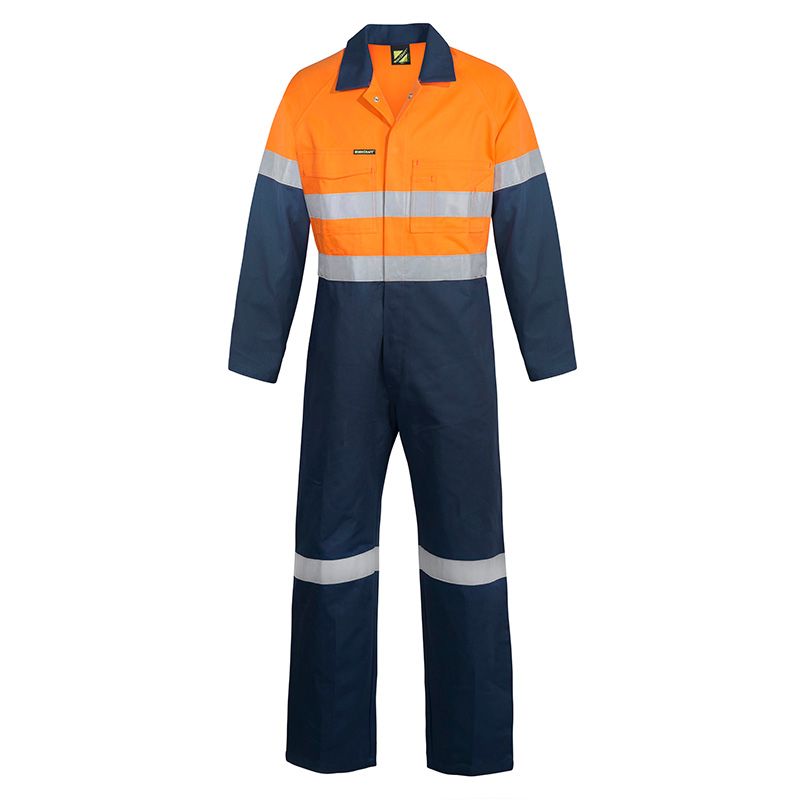
Hi Vis Cotton Coveralls With Reflective Tape
-
Key features: Cotton comfort for warm climates, reflective tape for visibility in low-light, breathable fabric for long shifts
-
Best for: Daytime construction tasks where breathability and comfort are priorities
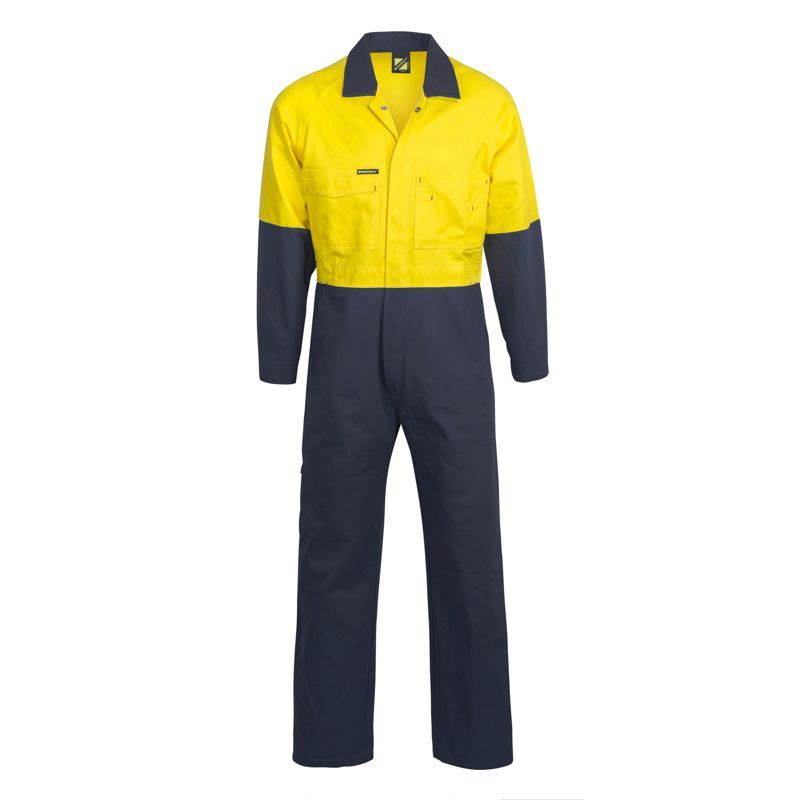
Hi Vis Two Tone Poly/Cotton Coveralls (WC3059)
-
Key features: Durable poly/cotton blend for tougher wear, easy maintenance and laundering, high-visibility two-tone design
-
Best for: Sites where repeated laundering is expected and durability matters
Working in construction or roadwork? Explore WorkArmour's hi-vis coveralls to find the right class and material for your site.
Durable Cotton Coveralls for Manufacturing and Maintenance
Workers performing long shifts in manufacturing and maintenance environments need durability and ease of movement.
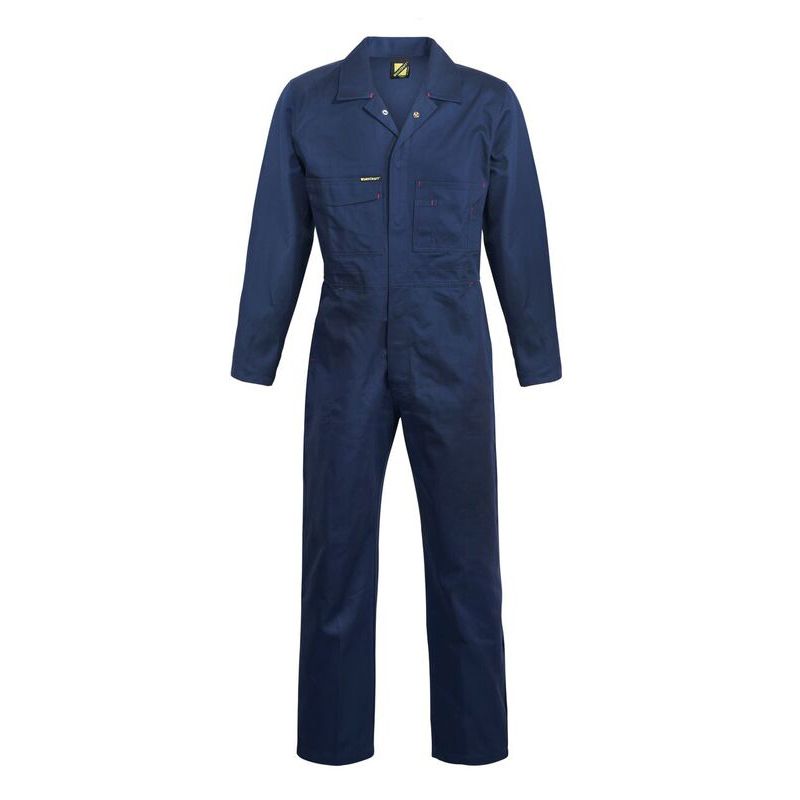
Cotton Drill Coveralls (WC3050)
-
Key features: Breathable cotton drill fabric, reinforced seams for abrasion resistance, full-length zip closure, multiple pockets for tools
-
Best for: Long shifts in manufacturing, light maintenance and general workshop tasks
Flame-Resistant Coveralls for High-Risk Industries
Protection from heat and flash-fire hazards is essential in oil & gas, mining, electrical utilities and welding operations.
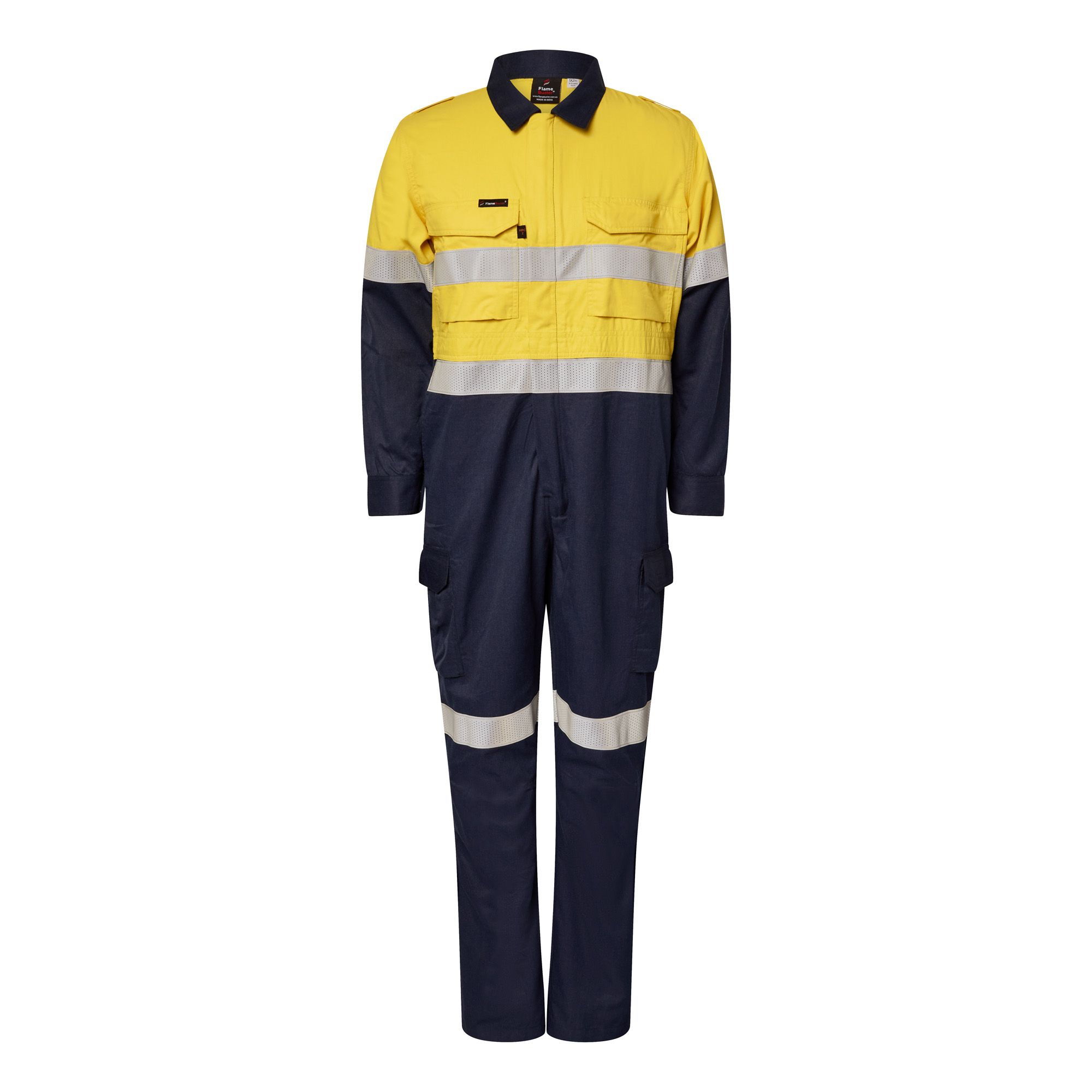
HRC2 Hi Vis FR Coverall With FR Tape
-
Key features: Engineered FR fabric for flame resistance, retroreflective FR tape for day/night visibility, meets HRC2 arc flash protection, durable construction for high-risk environments
-
Best for: Oil & gas, mining, electrical utilities and welding where flash fire or arc risk exists
Operating in high-risk environments? Contact WorkArmour's technical team to confirm the correct FR rating and HRC for your electrical or flame hazard controls.
Conclusion
Protection for workers against thermal, chemical, particulate and visibility hazards is undoubtedly important, which is why selecting compliant protective clothing is essential.
WorkArmour understands this and offers a targeted range of hi-vis, cotton and flame-resistant coveralls created for Australian industries — from construction and roadwork to mining and so forth. Each product meets relevant AS/NZS standards for real protection.
Take action today: Explore WorkArmour's full coverall range on the Safety Coveralls category page.
Choosing the right coveralls equals your workers' safety and your compliance record. Don't wait for an incident to verify that your PPE meets Australian standards.
Please complete your information below to login.
Sign In
Create New Account