


How Safe Are Your Slip Resistant Work Boots? Slip Ratings Explained
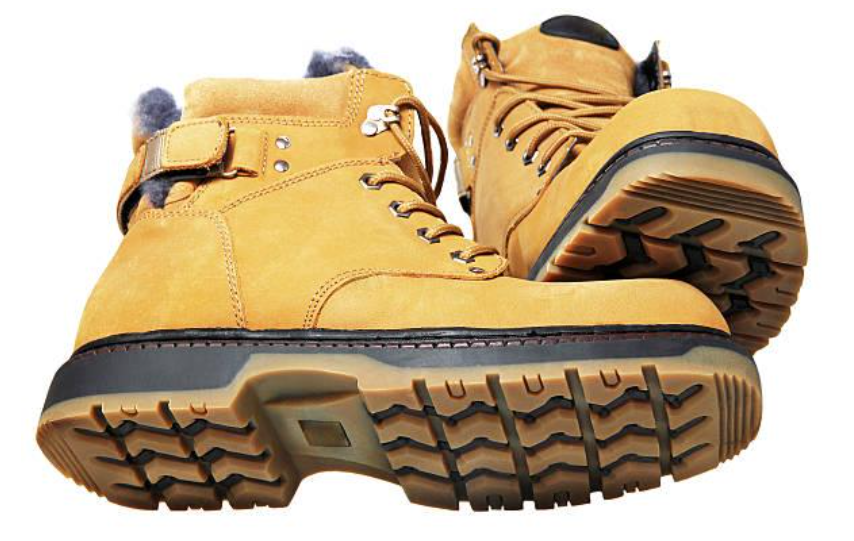
Slip resistant shoes are amongst some of the most important yet most overlooked safety workwear. While generic safety work boots are ubiquitous across countless workplaces, it’s industry compliant slip resistance work boots you need to ensure optimised safety in certain terrains. In many industries, workers regularly encounter slick or uneven surfaces—whether on wet concrete floors, metal ladders, rooftops, or kitchen tiles—making proper traction essential to safety and performance. Despite this, many employees remain unaware of their boots’ actual slip rating or what those ratings mean for their protection on the job. Understanding these ratings is key to preventing accidents, meeting workplace compliance requirements, and ensuring long-term safety.
Slip-resistant footwear plays a vital role in reducing one of the most common causes of workplace injuries: slips, trips, and falls. A high-quality slip-resistant sole provides stronger grip and traction on wet, oily, or icy surfaces, helping workers maintain stability and balance in unpredictable conditions. This not only prevents painful or costly injuries but also enhances overall efficiency, as workers can move with confidence without constantly worrying about losing footing.
Beyond individual safety, slip-resistant boots are an essential part of compliance with recognised safety standards, such as ISO and AS/NZS regulations, which require appropriate footwear for specific work environments. Employers and workers alike have a responsibility to ensure their footwear meets these standards, as non-compliance can lead to serious safety breaches and liability issues.
By understanding how slip ratings work, and ensuring your boots meet the requirements of your specific site, you take a proactive step toward accident prevention, improved performance, and full workplace compliance.
What Are Slip Ratings?
Slip ratings are standardized measures that indicate how much grip a pair of safety footwear offers on specific surfaces and under particular conditions. Around the globe, including in Australia, the EN ISO 20345:2011 standard sets out the technical requirements for safety footwear, which are also reflected in Australian regulations (AS 2210.3:2019). Under these standards, all certified safety boots must include a protective toe cap capable of withstanding an impact of 200 joules and a compression of 15 kilonewtons. To put this in perspective, that’s roughly equivalent to a 20-kilogram weight dropped from a height of 1 metre, or a compressive force of 1.5 tonnes.
The toe cap does not need to be made of steel, as long as it meets the specified performance criteria. Beyond impact and compression protection, the EN ISO 20345 standard also defines requirements for resistance to mechanical hazards, slip risks, extreme environmental conditions, and other workplace hazards. Slip-resistance ratings, for example, are determined through controlled laboratory testing on specific surfaces and contaminants, ensuring the footwear delivers predictable grip and stability under realistic working conditions.
By adhering to EN ISO 20345, safety footwear ensures comprehensive protection while meeting internationally recognised performance benchmarks, giving workers confidence that their boots are engineered to handle both common and extreme workplace risks.
Understanding SRA, SRB, & SRC Ratings
Slip ratings indicate how effectively a work boot or shoe prevents slipping on different surfaces. They are determined through laboratory tests under controlled conditions using specific surface types and contaminants.
-
SRA: Tested on ceramic tiles with a dilute soap solution, this rating shows how well footwear grips common indoor surfaces like kitchens, bathrooms, and food preparation areas.
-
SRB: Tested on steel flooring with glycerol, this rating measures traction on smooth, oily, or metallic surfaces, which are common in factories, workshops, and industrial sites.
-
SRC: This is the highest slip-resistance rating, combining the criteria of both SRA and SRB. Footwear with an SRC rating provides reliable grip across both wet, soapy tiles and oily metal surfaces, making it suitable for the widest range of work environments.
Why Site Compliance Matters
Wearing non-compliant work boots can significantly increase the risk of workplace accidents, particularly slips, trips, and falls, which remain among the most common causes of injury across industries. Footwear that does not meet recognised slip-resistance standards may fail to provide adequate traction on wet, oily, or uneven surfaces, leaving employees vulnerable to injury.
In Australia, many workplaces have regulations that require safety footwear to meet specific slip-resistance ratings, often aligned with standards such as EN ISO 20345. Failing to provide or enforce compliant footwear can result in safety breaches, regulatory fines, and legal liability for the business. Employers have a clear duty of care to ensure all staff are equipped with footwear that complies with these standards. By providing boots that meet the required slip-resistance ratings, employers not only protect their employees from injury but also maintain compliance with workplace health and safety regulations, reducing the risk of costly incidents and reputational damage.
Choosing the Right Slip-Resistant Boots for Your Worksite
Slips, trips, and falls remain some of the most common causes of workplace injuries. But with so many options available, choosing the right slip-resistant footwear can feel overwhelming.
However, selecting the correct pair is essential for maintaining safety, preventing workplace accidents, and ensuring compliance with industry requirements. Try factoring in the following considerations before you buy…
-
Your Workplace: Start by considering the surfaces you’ll be working on, as different environments (i.e. kitchens, hospitals, or industrial facilities) present unique slip hazards. Water, grease, oil, or uneven flooring can all contribute to accidents, so identifying these risks is a crucial first step. Your daily job tasks also play a role in deciding what features are needed. If your work involves lifting, climbing, or operating machinery, additional protective features may be required, and comfort becomes a critical factor for those who spend long hours on their feet. Familiarity with industry standards and workplace regulations is equally important, particularly in regulated sectors like healthcare or food service.
-
Features: Examining product specifications can provide insight into how a pair of shoes performs. Look for details such as outsole material, tread patterns, and safety features including toe protection, anti-static properties, or electrical hazard resistance.
-
Comfort: Comfort should also be a priority—adequate arch support, cushioning, and breathable materials help prevent fatigue and foot issues during long shifts.
-
Grip: Different brands incorporate various traction technologies to improve grip. Features like multi-directional treads, slip-resistant compounds, and grooves that channel liquids away from the sole can make a significant difference in preventing falls. In workplaces with heavily soiled or debris-prone floors, choosing outsoles that are easy to clean and maintain adds an extra layer of safety.
-
Style: Finally, consider the style of footwear that best suits your work and any dress code requirements. Consulting with your supervisor or safety officer can ensure you select footwear that is both safe and compliant.
The Most Reliable Slip-Rated Work Boots
Still not sure where to start? Then feel free to peruse some of our best-selling slip-rated boots. Each of these models is industry certified with many other features designed to optimise your comfort and safety in the workplace.
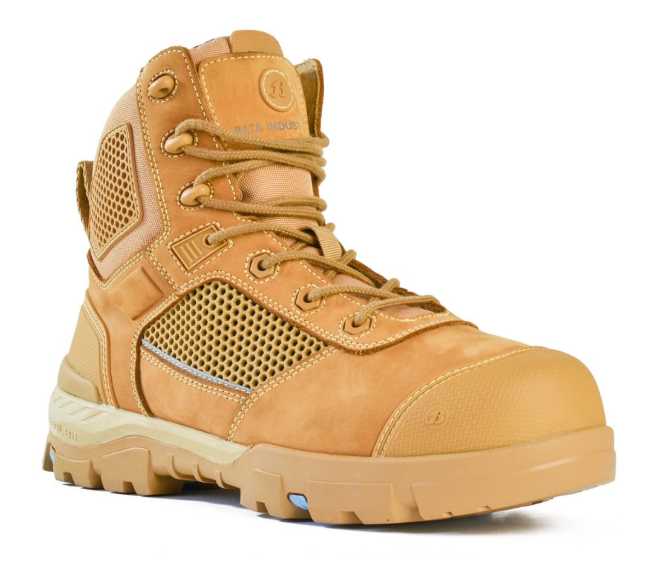
Bata Avenger Safety Ankle Boot (SRC Rated)
Bata avenger safety ankle boot is engineered for maximum protection, comfort, and durability in demanding work environments such as mining, construction, heavy industry, and trade. The padded collar and tongue provide enhanced ankle and shin support, while the wheat nubuck leather upper ensures long-lasting strength. A lightweight carbon toecap protects against impacts up to 200 joules, complemented by D30 metguard and ankle protection for advanced metatarsal and ankle safety. Comfort features include an Ortholite insole and Recoil energy return midsole technology, while the armour layer midsole guards against sharp objects penetrating the sole.
Magnum Strike Force 8.0 SZ CT Womens Black Work Boot (SRC rated)
These Magnum Strike Force 8.0 women's boots combine durability, protection, and all-day comfort for demanding work environments. The M.P.A.C.T. PRO moulded PU insole offers long-lasting cushioning, high rebound, and excellent breathability, while the EXOGEL system provides ultimate ankle impact protection. A fast-wicking lining keeps feet dry and comfortable, complemented by a durable leather upper with breathable mesh panels and rustproof hardware. Safety features include a lightweight, scanner-safe composite toe cap and a compression-moulded RECOIL midsole for impact absorption and support.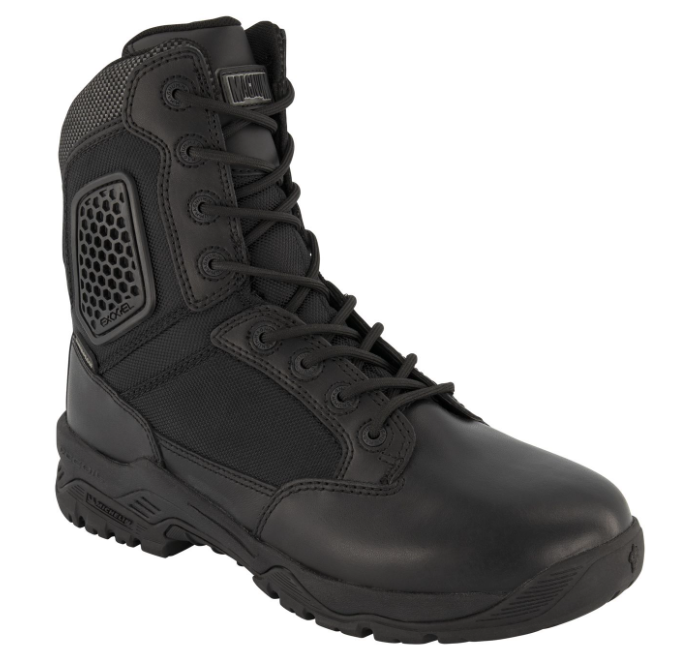
Bison XT Ankle Lace Up Safety Boot With Zip (SRC Rated)
These Bison XT Ankle Lace Up Safety Boots are designed for enhanced safety, comfort, and performance. The wide-fit sole reduces trip hazards, eliminates pressure points, and maximises grip across the surface area. The Bison Grip nitrile rubber outsole with a multidirectional tread provides superior traction on all surfaces. An antipenetration IMFLEX insole uses thermoforming technology to add extra comfort at heel strike and up to 20% more flexibility across the forefoot, while complying with ISO 20345:2004 international safety standards. A lightweight EVA midsole improves flexibility and absorbs impact, and a unique four-layer heel support system enhances heel and lower leg stability, helping to prevent ankle rolls.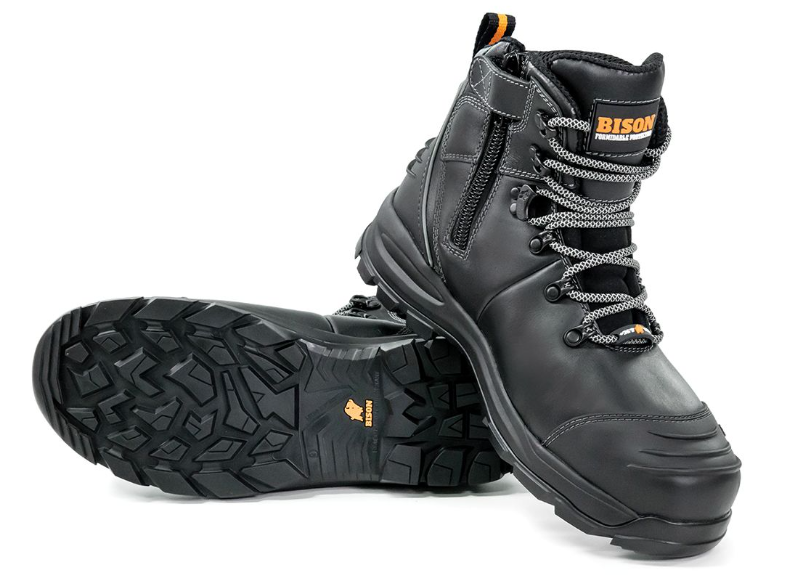
Magnum Precision Max SZ CT Wpi Work Boot Stone (SRA rated)
These Magnum precision max boots offer exceptional comfort, protection, and durability for demanding work environments. A PU insole provides maximum cushioning and support, while a fast-wicking lining and MAG-Dry waterproof membrane keep feet dry and comfortable. The Clarino microfiber upper with I-Shield technology repels water, dirt, and stains, and a scanner-safe composite toe cap ensures safety compliance. Easy on and off with a YKK side zip, the boots also feature a rubber outsole with a toe bumper for added protection and long-lasting durability. 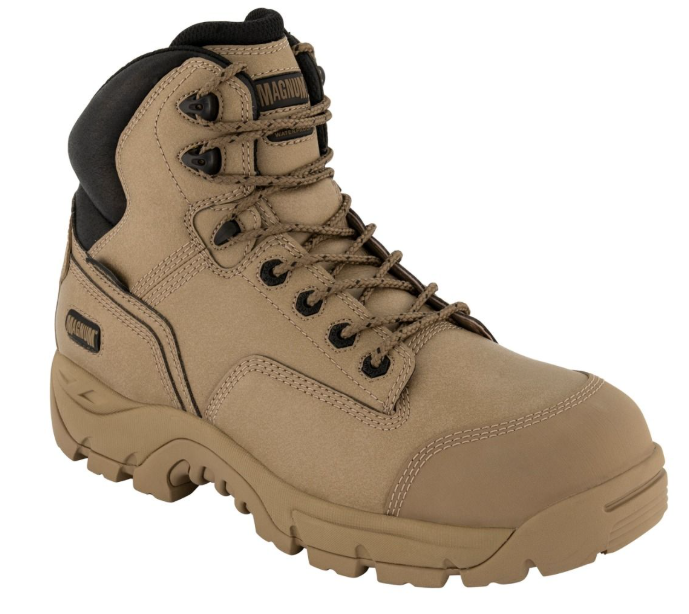
Conclusion
Slip-resistant work boots that meet safety standards are essential for preventing slips, trips, and falls in the workplace. Compliant footwear provides reliable traction on wet, oily, or uneven surfaces, protects employees from injury, and ensures businesses meet regulatory requirements, reducing the risk of accidents, fines, and liability. You can browse our range of slip resistant work boots here, or check out our many other products and services here. For all inquiries, you can get in touch with Work Armour directly.
Please complete your information below to login.
Sign In
Create New Account