


Complete Guide to Buying Medical Scrubs: What to Look For
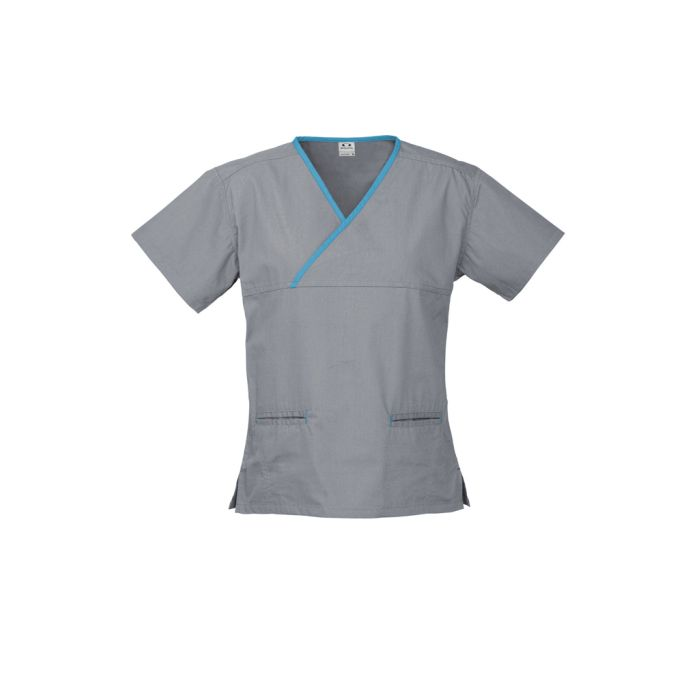
Hospital nurses log between 8,500 and 15,000 steps on a standard 12-hour shift. More than 65% of that time is spent on their feet, standing and lifting, often while transferring patients between beds and equipment.
Under clinic lighting, hour after hour of physical exertion takes its toll — and a uniform that fits poorly or traps heat only makes it worse, adding fatigue and skin irritation to an already demanding shift.
Medical uniforms are essential daily equipment, not just workwear. The right set of scrubs serves as an effective barrier to hygiene and keeps clinical tools within easy reach. It also needs to hold up in comfort across a full rotation.
This guide walks through the fabric compositions and sizing methods worth knowing, along with the compliance considerations that matter, so you can choose the right medical scrubs in Australia.
What Are Medical Scrubs?
Medical scrubs are purpose-built sanitary garments made for clinical environments. Once restricted to sterile operating theatres, they're now a standard uniform across Australian healthcare facilities.
Under the Royal Australian College of General Practitioners (RACGP) infection prevention standards and Australian Laundry Standard AS 4146, healthcare textiles need to withstand frequent sanitising washes without breaking down. Modern scrubs meet that demand while offering better breathability and freedom of movement than traditional corporate uniforms.
|
Garment |
What it is |
|
Scrub Tops |
Short-sleeved shirts with reinforced utility pockets, badge tabs and side hem splits for airflow |
|
Scrub Pants |
Work trousers with elasticated drawstrings, reinforced crotch gussets and deep cargo compartments |
|
Healthcare Tunics |
Structured tops with concealed zips or button closures, common in dental and aesthetic clinics |
|
Clinical Accessories |
Theatre caps, ID tags and warm-up jackets for cold ward environments |
8 Things to Look for When Buying Medical Scrubs
1. Fabric & Material
Textile composition decides how a garment holds up across a 12-hour shift. Look for a balance of breathability and tear resistance, without sacrificing stretch recovery.
Cotton is gentle on sensitive skin and breathes well, though it creases easily and holds onto moisture. Polyester goes the other way. It resists tearing. It also dries fast and keeps its colour through repeated commercial washes, but it doesn't breathe well on its own. Most workwear brands split the difference with a cotton-polyester blend. They then add a touch of elastane or spandex, usually at a 3% to 5% ratio, for stretch that moves with the body instead of restricting it. The comparison further down breaks down which blend suits which clinical setting.
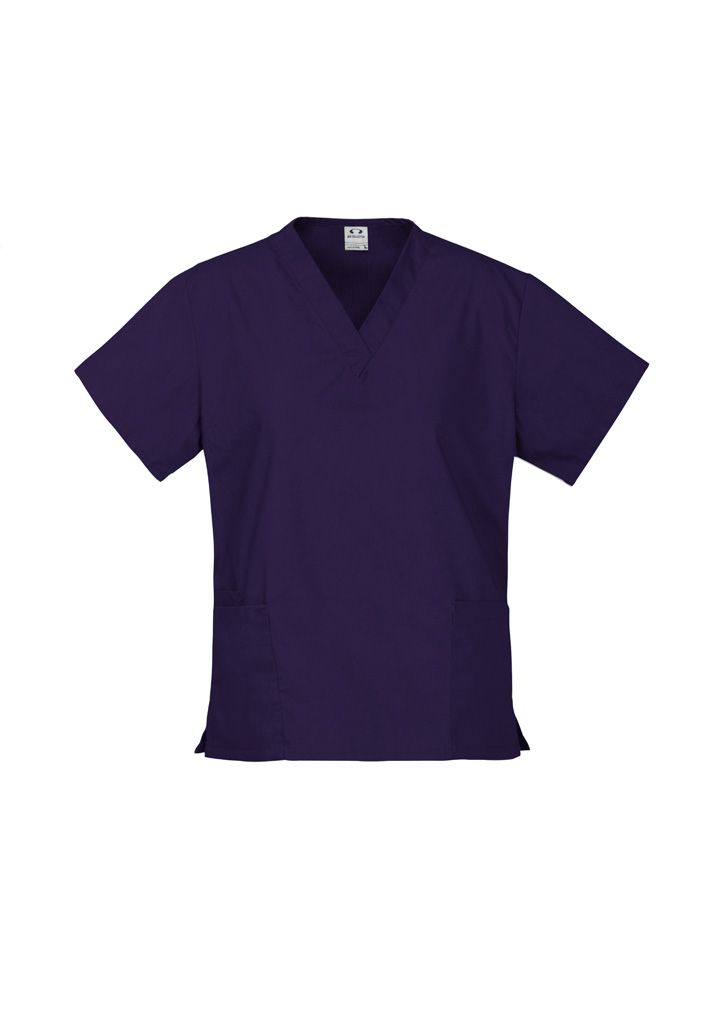
For traditional durability, the Classic Women's Scrub Top uses a 65% polyester and 35% cotton weave built with mechanical give. If a lighter, pyjama-soft feel suits you better, the Avery Scrub Range runs 96% polyester and 4% elastane and stays crease-free all day.
2. Fit & Size
Ill-fitting scrubs cause distractions and physical fatigue. Excess fabric can catch on equipment or snag IV lines, while restrictive cuts limit range of motion during emergency patient transfers.
Take these four measurements over base layers with a flexible tape measure:
|
Measurement |
How to take it |
|
Chest / Bust |
Around the fullest point, tape level under the arms |
|
Waist |
Around the natural waistline, leaving a finger's width of ease |
|
Hips |
Around the widest point of hips and glutes, feet together |
|
Inseam |
From the inner crotch seam to the top of clinical footwear |
Check the brand's own sizing chart rather than assuming standard Australian retail sizing — workwear tolerances vary by cut.
3. Comfort and Mobility
Manual patient handling is one of WorkSafe Australia's flagged risk factors for musculoskeletal strain in healthcare roles, and it's easy to see why: fabric that won't flex pulls across the shoulders and lower back with every reach or lift.
Look for four-way stretch weaves and action back pleats, backed by a wide waistband elastic for support. The Riley Stretch Scrub Top blends 52% cotton, 45% polyester, and 3% elastane for activewear-level flexibility that holds its shape across multiple shifts.
4. Pockets and Functionality
A healthcare worker's pockets function as a portable workstation.
On an average shift: Diagnostic pens, markers, penlights and a work phone fill one pocket, while a Vocera badge, pager, trauma shears and medical tape fill another. Saline flushes and an ID card round things out, alongside the day's handover sheets — roughly 1.5kg of gear in total.
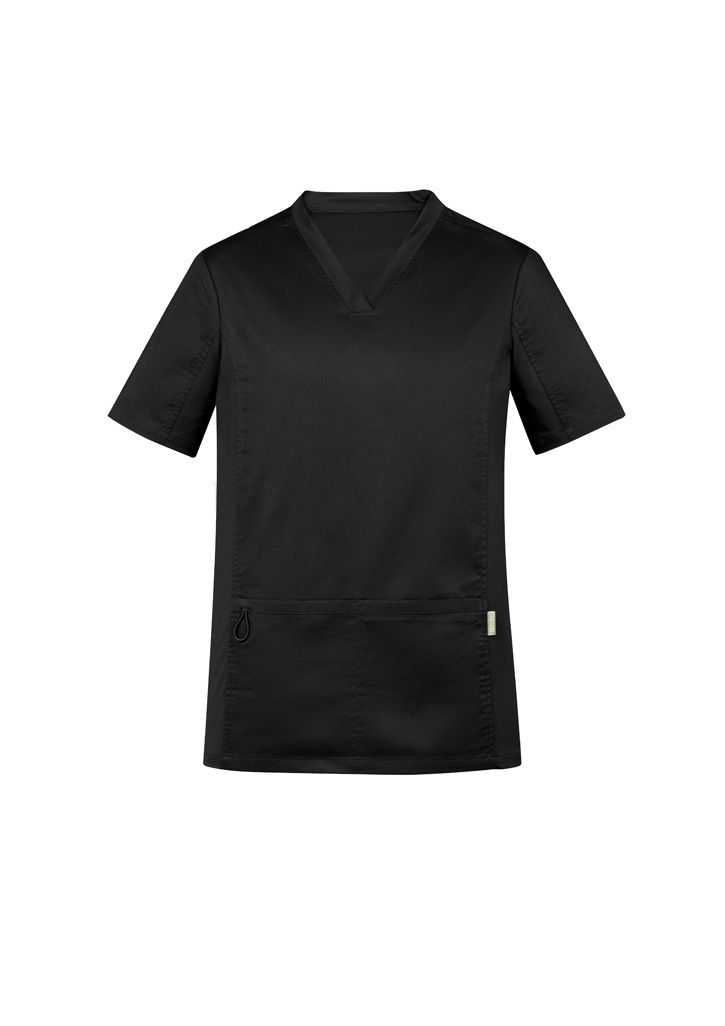
Placement matters more than pocket count. Pockets set too low swing against the knees; shallow chest pockets spill items during clinical assessments. The Women's Avery Straight Leg Scrub Pant uses multi-compartment cargo pockets and dedicated device sleeves to keep heavier tools secured against the leg.
5. Antimicrobial and Moisture Management
Temperatures swing fast between hospital wards and surgical suites, and heavy PPE only adds to the heat build-up over a shift.
Choose performance fabrics with moisture-wicking technology that pulls sweat away from the body to evaporate quickly. Cotton-rich blends and lightweight poly-blends enhance airflow, keeping heat rash and chafing at bay over long shifts.
6. Durability and Easy Care
Healthcare apparel goes through constant sanitising washes, and cheap commercial scrubs feel it fast: seams fail, fabric pills, colour fades within a handful of cycles.
Reinforced bar-tacking at pocket corners and double-needle flat-felled seams hold up far better. Colourfastness ratings are worth checking too, especially under commercial wash cycles. Quality nursing scrubs are built to withstand 50+ commercial wash cycles under Australian laundering standards — though it's always worth following the manufacturer's specific care instructions over a generic rule of thumb.
7. Style and Professional Appearance
A modern uniform builds patient trust while keeping a clean clinical presentation, and WorkArmour offers a genuine choice of cuts rather than a single house style.
|
Feature |
Options |
|
Top necklines |
V-neck, crossover, round neck |
|
Trouser silhouette |
Straight-leg, slim-leg, jogger with ribbed cuffs |
8. Specialised Requirements
Certain healthcare environments call for garment adaptations that go beyond a standard cut.
|
Requirement |
What it covers |
|
Maternity Scrubs |
Soft, expandable belly bands in breathable jersey, supporting growth across all trimesters |
|
Unisex Sizing |
Straight-cut torso and broad shoulder seams for simplified bulk procurement |
|
Scrub Caps |
Reusable cotton caps that secure hair, cut single-use theatre waste and display role markers |
Cotton vs Polyester vs Blended Scrubs: Which Is Best?
There's no single right answer here — the best fabric choice depends on shift length, climate, how much movement the role involves, how the garments get laundered, and personal preference.
|
Fabric Composition |
Key Benefits |
Best Clinical Setting |
Laundry & Care Requirements |
|
100% Pure Cotton |
Hypoallergenic, maximum natural breathability, soft on sensitive skin |
Low-intensity consult rooms, dermatology, private practices |
Cold/warm wash, high wrinkle tendency, requires ironing |
|
100% Polyester |
Exceptional durability, stain resistance, fast drying, wrinkle-free |
Busy emergency departments, high-volume commercial laundries |
Machine washable, quick air dry, no ironing required |
|
Poly-Cotton (65/35) |
Balanced tear strength, breathability, minimal shrinkage |
Public hospital wards, aged care facilities, surgical suites |
Safe for hot and commercial wash cycles (AS 4146 compliant) |
|
Poly-Elastane (Avery) |
4-way stretch, ultra-lightweight, silken drape, no ironing needed |
Allied health, dynamic nursing, veterinary clinics |
Machine wash, line dry in shade, quick drip-dry |
|
Cotton-Poly-Elastane (Riley) |
High comfort, moisture absorption, activewear flexibility |
High-movement triage, paramedic, active nursing shifts |
Warm machine wash, resists pilling, easy care |
How Should Medical Scrubs Be Washed?
-
Pre-treat bio stains fast. Rinse blood and iodine marks with cold water immediately, and treat other fluid stains the same way — hot water coagulates proteins and binds them permanently into the weave.
-
Wash colours separately. Keep darks apart from whites and brights to stop dye transfer and keep uniform colours looking sharp.
-
Wash for thermal disinfection. AS 4146 sets this at a minimum of 65°C for at least 10 minutes, or 71°C for at least 3 minutes — enough to eliminate pathogens without degrading quality poly-cotton fabrics.
-
Skip the chlorine bleach on stretch fibres. It breaks down elastane and spandex cores, so fabrics lose their elasticity and shape over time.
-
Air dry in shade, or tumble dry on low. Line drying out of direct sunlight preserves colour; if tumble drying, a low-heat setting protects synthetic blends.
Upgrade Your Clinical Wardrobe with WorkArmour
When you work long hours on hospital wards or in private clinics, your uniform needs to work as hard as you do.
Explore the complete range of medical scrubs in Australia at WorkArmour. Browse the catalogue today, whether you're placing a bulk order for a full clinical team or simply restocking your own kit — built for comfort and movement, with the durability to go the distance.
Browse the Collection: View the full range of healthcare workwear and scrubs online.
Request a Clinic Quote: Equipping an entire department or practice? Contact the WorkArmour team for bulk sizing kits and custom embroidery solutions.
Please complete your information below to login.
Sign In
Create New Account